Jazz Era
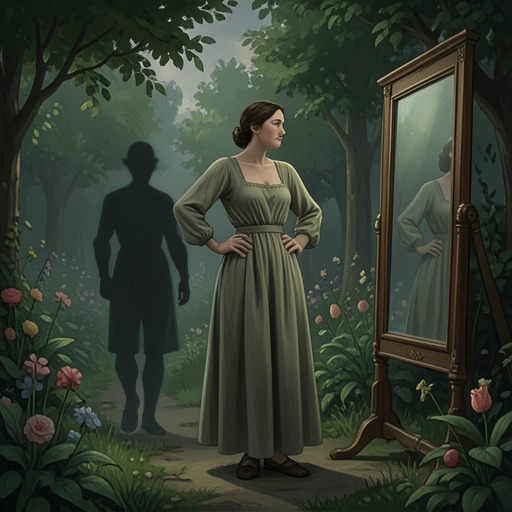
Lady Chatterley's LoverIn Lady Chatterley’s Lover, the Jazz Era is the social and intellectual setting for Constance Chatterley and Hilda’s youth, when cosmopolitan education and personal freedom shape their expectations of intimacy. The sisters’ experience is presented not as a simple emancipation story but as a conflict between the ideal of independence and the need for human connection: they prize discussion and self-possession, yet find that romantic experience can leave them more distant rather than closer to another person.
Identity and Background
The novel introduces the sisters’ upbringing as both culturally expansive and socially unconventional. Their father, Sir Malcolm Reid, is a once well-known artist, and their mother belonged to cultivated Fabian circles. From childhood, Constance and Hilda move between artistic culture and idealistic politics. Their parents take them to Paris, Florence, and Rome to encounter art, and also to the Hague and Berlin for large socialist conventions, where speakers address audiences in several languages. The resulting outlook is described as at once cosmopolitan and provincial: the sisters are at ease with art and political ideals, but their formation remains attached to a particular cultured social world.
That background helps explain why the sisters are not daunted by either art or ideal politics. They have been prepared to participate in intellectual life, not merely observe it. The Jazz Era’s promise of freedom enters a life already organized around education, argument, and the assumption that women can meet men as intellectual equals. This context matters because their later romantic choices grow out of that confidence, even as the narrative tests whether confidence in the mind can answer needs that are not resolved by argument.
Education and the Ideal of Freedom
At fifteen, Hilda and Constance are sent to Dresden, where music is among their studies. They live freely among students, argue with men about philosophical, sociological, and artistic questions, and regard themselves as at least equal to their male companions. They also walk in the forests with young men carrying guitars and sing Wandervogel songs. These experiences join intellectual exchange to social independence: the sisters can speak openly, travel in mixed company, and take part in a shared youthful culture.
In this account, talk is more important than romance. The sisters’ ideal of freedom includes the right to say what they think and to preserve an inward self that is not possessed by another person. Their independence is therefore not simply a rejection of conventional restraint; it is a positive claim to intellectual and personal autonomy. But the narrative also establishes a limitation in the ideal as they understand it. If conversation becomes the principal measure of intimacy, physical love may seem secondary, even disruptive, rather than another form of connection.
Early Relationships and Their Aftermath
By eighteen, both sisters have had tentative love affairs. Their young male companions seek a romantic connection, while the girls approach it uncertainly, influenced partly by how much importance their society seems to attach to love. They give themselves to the young men with whom they have formed the closest intellectual bond, but regard the discussions as the central experience and the romantic attachment as less significant. Afterwards, each feels less in love and somewhat resentful, as though the relationship has intruded on her privacy and inner independence.
The novel presents this response as part of the sisters’ own reasoning about freedom. They believe that a woman can enter a relationship without surrendering her inner self or placing herself under a man’s control. They also imagine that a woman may retain a measure of power by withholding emotional participation. These beliefs make their approach to intimacy more complex than simple compliance: the sisters understand themselves as making choices and protecting their independence. At the same time, their subsequent discomfort reveals that control and detachment do not provide the mutual closeness they have not learned how to seek.
By the time the First World War arrives, both have had their early romantic experiences, and they are hurried home. In retrospect, the account emphasizes that they had felt most drawn to young men with whom they could talk at length and resume intense discussions over months. Intellectual affinity is thus shown to be genuine and powerful, but not sufficient in itself to settle the question of how bodily and emotional intimacy should fit into a life organized around freedom.
Narrative Significance
The Jazz Era material establishes an early pattern that the novel later subjects to broader scrutiny: a person may be socially liberated and intellectually accomplished while remaining emotionally isolated. The sisters’ history supplies a contrast between the vitality of their arguments and the disappointment that follows when romantic connection is treated as an accessory to mental companionship. Their experience does not make their education or independence meaningless; instead, it exposes the limits of defining freedom only as resistance to dependence.
The framing also connects private relationships to the novel’s opening concern with a civilization in crisis. The critical account of the passage interprets the sisters’ ideal of unrestricted selfhood as a form of freedom that can conceal a hunger for connection through the body. That interpretation casts their youthful history as more than background: it introduces the distinction between being free from another person and being capable of genuine connection. The Jazz Era therefore names both a cultural atmosphere of possibility and an unresolved problem in the sisters’ understanding of love, independence, and intimacy.